By Rhian JONES
Why writers’ festivals matter as spaces for respectful conversations
Literary festivals act as crossroads - places where people from all walks of life come together through a shared love of storytelling. This collective interest creates a space where meaningful, value-rich conversations naturally emerge. Within these worlds of stories, ideas and knowledge, Writers’ Festivals are central to fostering respectful dialogue that shapes how children view the world and those within it.
Stories, at their core, are pathways to empathy. They allow us to recognise our own lived realities while also providing access to perspectives we may otherwise never encounter. In everyday life, it is easy to see the world only through the lens of our own experience; a viewpoint that, in isolation, is often rigid and limiting. Philosopher Martha Nussbaum, whose work connects human development, ethics and emotion, describes this as narrative imagination; that is, “the ability to think what it might be like to be in the shoes of another person” (Nussbaum, 2024).

While true empathy often grows through direct experience, literature offers the closest alternative - allowing us to encounter worlds, emotions and realities that transcend our own. This positions literary festivals as invaluable opportunities for children to recognise and understand affect, where they can feel empathy toward stories and experiences.
Similarly, a sense of belonging develops from shared social encounters. It is through this belonging that children build a sense of identity and values, creating room for confidence in their own expression, as well as the agency to advocate for others. When children feel included, they have the tools to start their own story and to listen respectfully to the stories of others. This process plays a role in shaping how they understand social contexts and their place within them.
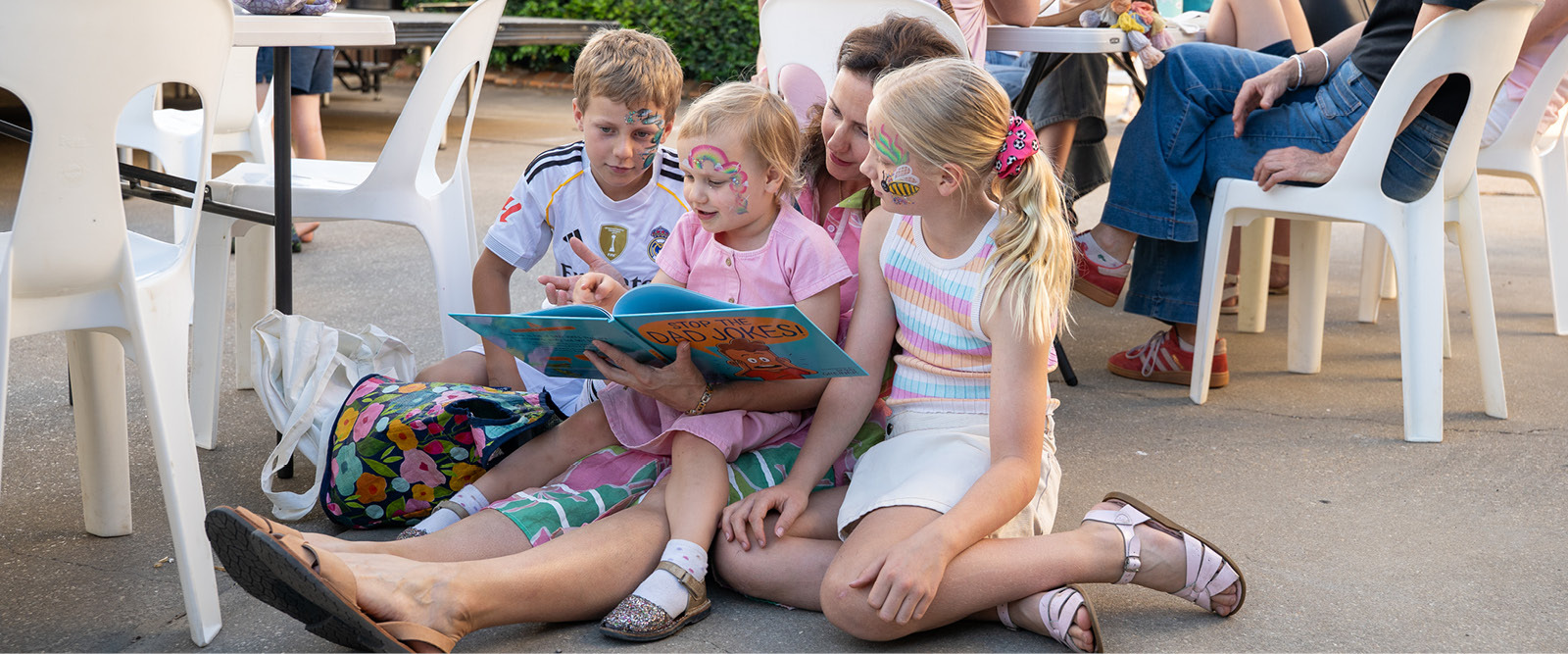
Embracing diversity
Cultural theorist Jim McGuigan refers to this as the ‘cultural public sphere’: forums created by cultural events that encourage reflection, openness and communication. Literary festivals introduce children to a variety of ideas and perspectives, allowing conversations to continue beyond the festival without pressure or conflict. This kind of gentle exposure supports understandings beyond familiar worldviews and stimulates curiosity, creativity and a love of lifelong learning.
Extracurricular settings aid children in learning how to effectively navigate emotional differences in-and-beyond the classroom. They act as a bridge between the classroom and the real world, linking learned behaviours with the often unpredictable and challenging nature of broader society. Literary festivals function in this way: contexts in which emotional intelligence is formed not through isolation but through shared engagement that encourages inter-intrapersonal awareness, connection and reflection.
Research from the International Journal of Advanced Research in Science, Communication and Technology found 70% of students reported that participation in extracurricular activities helped them to develop emotional intelligence (International Journal of Advanced Research in Science, Communication and Technology, 2025). Emotional intelligence is a key skill that shapes how we encounter opportunities in life, and how we respond to and engage with them - lessons that no child or parent will ever regret investing in.

Taken together, literary festivals offer more than entertainment. They are the places where children feel seen and are encouraged toward positive change by learning to observe, question critically and interpret social contexts. They help shape a world that evolves from understanding, rather than persuasion.
References
Nussbaum, M.C. (2010) Not for Profit: Why Democracy Needs the Humanities. Princeton, NJ: Princeton University Press, pp. 95–96.
McGuigan, J. (2004) ‘The Cultural Public Sphere’, European Journal of Cultural Studies, 7(4), pp. 427–443.
International Journal of Advanced Research in Science, Communication and Technology (2025) Role of extracurricular activities in developing emotional intelligence and empathy, International Journal of Advanced Research in Science, Communication and Technology, 5(2), p.288.